
Building and Leading a Healthy Academic Department Culture
September 24 - 25, 2026 | Denver, CO
Shape the culture your department needs to succeed.
What You'll Gain
- Experience a structured, inclusive exercise that you can immediately use with your own department to define shared values and norms.
- Clarify the core elements of a strong department culture and understand your leadership role in sustaining them.
- Develop leadership behaviors that build trust in your department.
- Manage performance issues and difficult conversations so that they reinforce culture and help your department to be more resilient during change.
Overview
Trust is fragile in academic environments, and culture is never neutral—it is always taking shape. The real question for leaders is whether they are shaping it with intention.
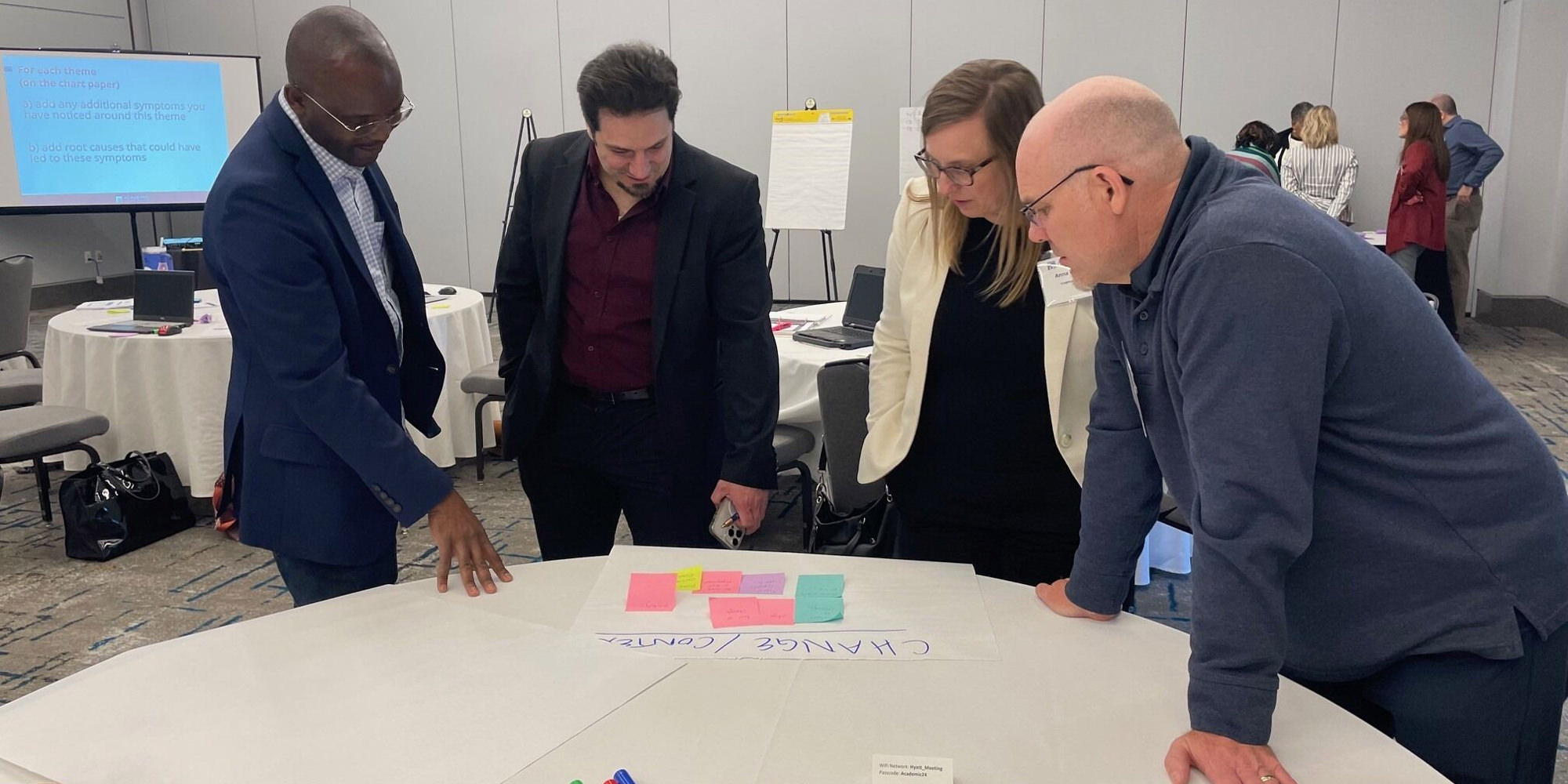
This workshop provides department Chairs, Deans, and academic leaders with a practical framework for cultivating healthy unit cultures grounded in transparency, accountability, and psychological safety. You’ll engage in a hands-on culture-building exercise that you can immediately adapt for your own teams while examining the leadership behaviors that most strongly influence norms and expectations.
You’ll also explore the common “enemies of trust”—including inconsistency, avoidance, and perceived favoritism—and leave with concrete strategies to reinforce credibility, fairness, and collaboration. The result is a stronger, more resilient team that’s better equipped to navigate change together.
Session Descriptions
More details about the event schedule can be found by clicking Learn More and Register, but session descriptions for the two days follow below:
Reframing the Leader’s Role
As an academic leader overseeing a group within your unit, you play a critical role in inviting participation and shaping how your team understands what it means to contribute to a healthy departmental culture. In this session, you’ll begin to recognize that recurring or tense conflict, disengagement, and resistance to change are signals of culture—not simply individual shortcomings.
What is a Departmental or School Culture?
This session introduces the key elements of departmental or school culture, including communication styles, performance expectations, interpersonal interactions, and operational efficiency. You’ll explore how these elements manifest within academic units and evaluate your relevance and impact in your own contexts.
Designing Your Unit’s Culture: An Inclusive Exercise
Building on the previous session, this exercise models the first step in identifying a healthy departmental or school culture. You’ll work as if you were the faculty of a single unit or school, learning to pinpoint three key cultural features “your department” wants to prioritize. This train-the-trainer exercise is designed so that, as an academic leader, you can take it back to your campus and facilitate it with your own team.
Identifying Your Unit’s Behaviors and Commitments
In this session, you’ll move through the second and third steps of the mock simulation. In small groups, you’ll identify the individual and collective behaviors that support the culture you’ve defined. Then, as a member of your “department,” you’ll discuss and craft responses to three key commitment questions, intentionally guiding your unit toward the culture you have collectively shaped.
High-Performing Teams Assessment
Now that you’ve experienced how to facilitate and engage faculty in defining what an ideal departmental culture looks and feels like, you’ll use an assessment to identify opportunities to strengthen your team’s performance and group processes. High-performing teams are rare not because of a lack of talent or effort, but because team performance—and the conditions that support it—are dynamic. Most teams spend most of their time doing the work rather than stepping back to examine how they work together. When teams struggle, it is often a matter of group process, not individual capability.
Sense-making and Integration
Individually or in small groups, we’ll take time to pause, reflect, and make meaning of what you’ve experienced across the two cultural exercises and high-performing teams assessment sessions. Through guided reflection and conversation, this is your opportunity to surface key insights and begin connecting concepts to your own leadership context and what comes next.
The Enemies of Trust—and How Leaders Accidentally Reinforce Them
What’s essential for high performance and engagement among faculty and staff? Trust. Without it, people disengage from their work. Yet trust is complex and fragile, far easier to erode than to build and sustain. This is especially true in times of uncertainty, rapid change, and volatility, conditions that currently define much of higher education and are likely to persist. In this session, you’ll explore why prioritizing trust—in yourself as a leader and in the institution—is more important than ever. We’ll examine common “enemies” of trust, the leadership behaviors that unintentionally erode it, and identify practical ways to protect and strengthen trust so you can lead your faculty and staff through change with greater confidence and steadiness.
Shaping and Sustaining Culture Through Leadership and Coaching
This final session explores how you can actively shape and sustain a positive culture within your unit(s). You’ll learn strategies to manage common challenges that emerge during culture-building exercises—such as disengagement, negativity, or lack of trust—while also practicing coaching skills that reinforce shared values, strengthen norms, and build collective ownership. Through interactive exercises and actionable techniques, you’ll leave equipped to guide your team, foster accountability, and empower both current and aspiring leaders to reinforce the cultural expectations you define together.
Who Should Attend
Academic leaders who manage a department or divisional culture will benefit most from this workshop. In particular, we encourage Department Heads and Chairs, Program Directors, Deans and Associate Deans, Provosts and Associate Provosts, and those working in faculty development to join us. Past attendees of our Managing Difficult Faculty and Staff Workshop and Essential Leadership Skills for Deans Workshop and Chairs Workshop will find this workshop complementary to their previous takeaways.
How You’ll Use This to Move Work Forward
- Deans – Establish a healthy culture in your division that allows you to move confidently into the future.
- Department Chairs – Reset your department culture with more trust and intention.
- Academic Leaders – Support your leaders in building high-performing departments.
Bring a team! Register 3 or more people and save more than $1,000! Discounts will be automatically applied at checkout.
Location
Academic Impressions Office
5299 DTC Blvd, Suite 1400
Greenwood Village, CO 80111

What makes our events different?
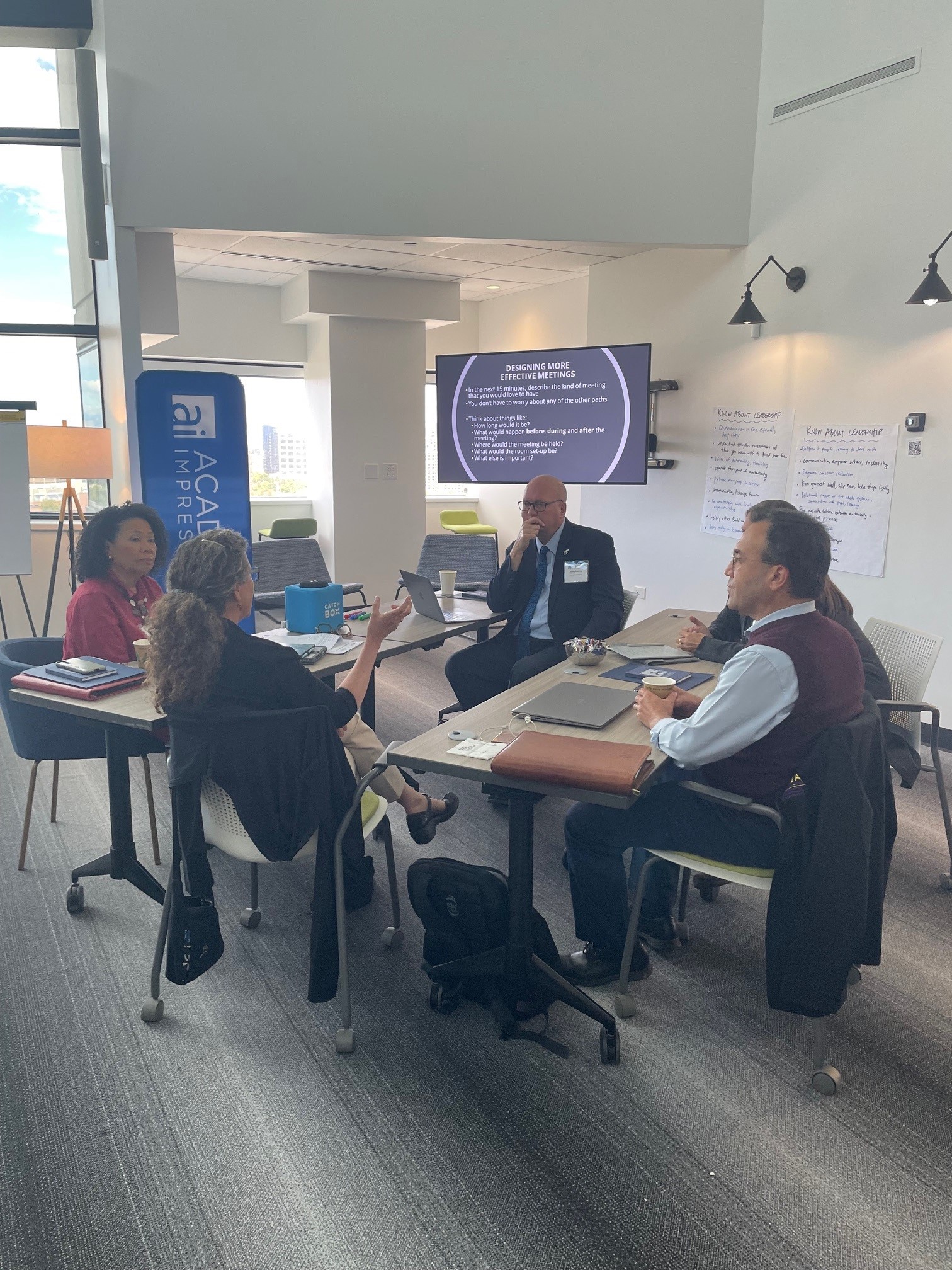
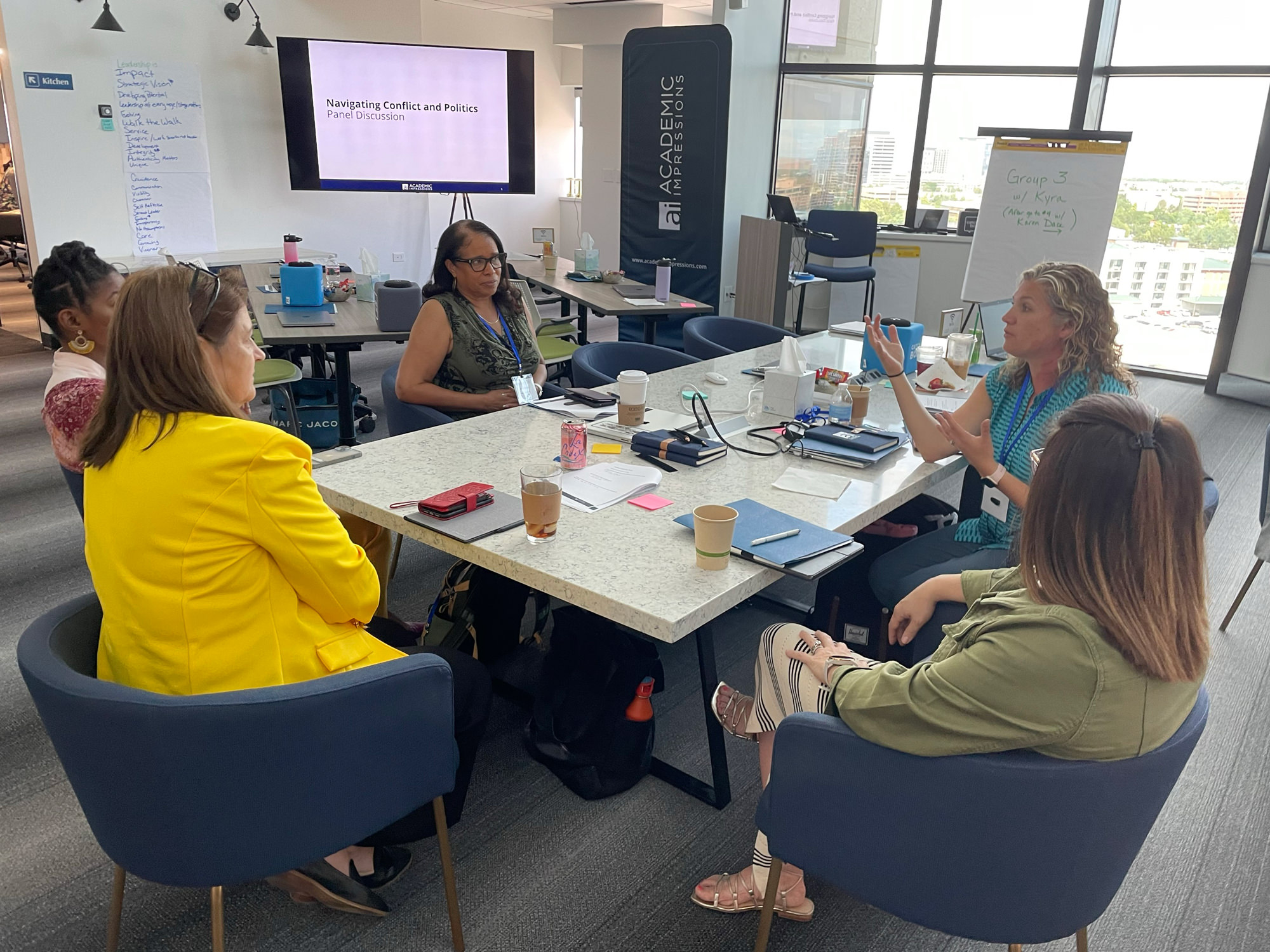
Academic Impressions workshops provide the opportunity for quality conversations and relationship-building through both formal and informal networking opportunities in an intimate setting. Our in-depth and hands-on approach to learning provides you with actionable takeaways.
Learn More About the Academic Impressions Workshop Experience ➞
Grow Leadership.
Maximize Your Budget.
Empower your team with leadership development that pays off. Our Workshop Flex Packs help you build leadership capacity while saving money. For a limited time, save up to $795 a seat when you purchase 3 or more seats.
Pricing
Starting at:
-
Non-Member Price: $2,495
/person
-
Member Price: $2,245
/person
-
Teams: Save $2,000+
for teams of 3 or more
Additional optional add-ons are available during checkout.
September 24 – 25, 2026 | Denver, CO
Questions About the Event?
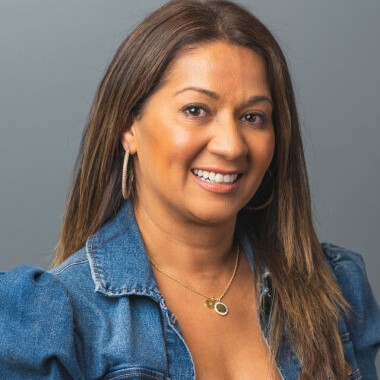
Rabia Khan Harvey, M.Ed., MSHR
Senior Learning & Development Manager, Academic Impressions
Learn More about Rabia Khan Harvey, M.Ed., MSHR